





‘Step to remove trust deficit’: Manipur CM on first talks with Kuki-Zo group in three years
The Kuki-Zo Council said it raised several key matters, including the need to maintain buffer zones until a political settlement is reached.
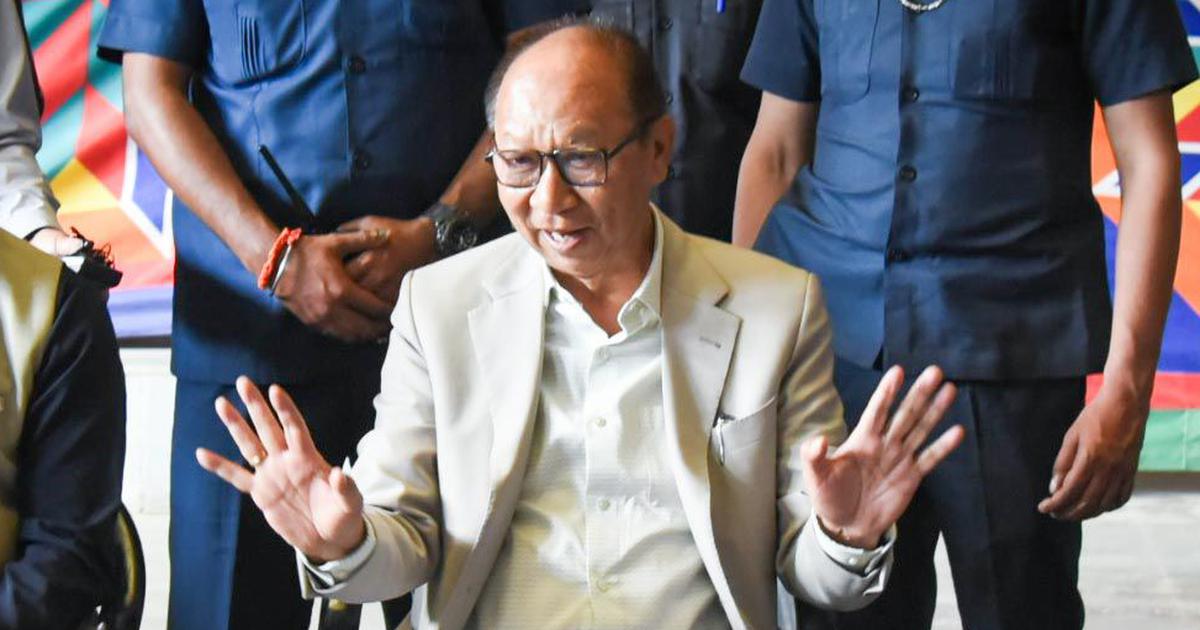
Manipur Chief Minister Yumnam Khemchand Singh on Sunday said that the government’s decision to hold talks with the Kuki-Zo Council was the “first step to remove the trust deficit” between the state’s two major ethnic communities and to bridge gaps in an effort to bring peace.
The meeting on Saturday was the first between the chief minister of the state and the umbrella organisation of Kuki-Zo groups since ethnic violence broke out in May 2023.
In a statement, the Kuki-Zo Council described the meeting as being largely an ice-breaking session.
The organisation said that it had raised several key matters, including the need to de-escalate tensions between the Kuki and Tangkhul communities, the “importance of maintaining the sanctity of the buffer zone until a political settlement is reached” and ensuring justice for the victims of the conflict “as a fundamental prerequisite for any meaningful peace”.
The need to expedite the Suspension of Operations talks to ensure lasting peace was also highlighted, it added.
The Suspension of Operations pact was signed between the Centre, the Manipur government and two conglomerates of Kuki militant outfits – the Kuki National Organisation and United Peoples Front – in 2008 and renewed in September.
Under the agreement, the security forces and the militant groups are prohibited from launching operations. The militant groups must abide by the laws of the land and are also confined to designated camps identified by the Union government.
The Kuki-Zo Council said that the meeting on Saturday concluded without any decisions or agreements.
In a press release, the chief minister’s office quoted Yumnam Khemchand Singh as saying on Sunday that the meeting was a “good beginning”. He said that efforts must focus on reconciling differences between the state’s 36 communities and moving forward.
“Let us forgive and forget the past for a better future,” he was quoted as saying by his office.
The chief minister made the comments during a press briefing following an unrelated event in Imphal.
The Kuki-Zo groups have maintained that the creation of a separate administrative arrangement in the form of a Union Territory, in the areas of the state dominated by the community, is the way forward to end the conflict. While the Meiteis dominate the valley region, the Kukis are in the majority in the state’s hill districts.
Commenting on this, Yumnam Khemchand Singh said that Prime Minister Narendra Modi had already stated that the territorial integrity of Manipur would not be compromised. He did not need to comment further on a matter already addressed by the prime minister, he added.
Responding to questions about the movement of traffic along the Imphal-Kohima highway, the chief minister acknowledged that while travel had resumed, fear remained because of trust issues between the communities.
“This is the reason why I said that removing [the] trust deficit is my priority,” he said.
Kuki-Zo Council chief Henlianthang Thanglet told The Indian Express that the body would not have agreed to the meeting under the previous government led by Bharatiya Janata Party leader N Biren Singh. “Since there is a new government, we agreed to come,” Thanglet was quoted as saying.
At least 260 persons have been killed and more than 59,000 persons displaced since ethnic clashes broke out between the Meitei and Kuki-Zo-Hmar communities in May 2023. There were periodic upticks in violence in 2024 and 2025.
Biren Singh had stepped down as the chief minister in February 2025 amid allegations from Kuki-Zomi-Hmar groups that his response to the violence had been partisan and that he had stoked majoritarianism.
After he resigned, Manipur was under the President’s Rule for a year until Yumnam Khemchand Singh took oath as chief minister on February 4.
